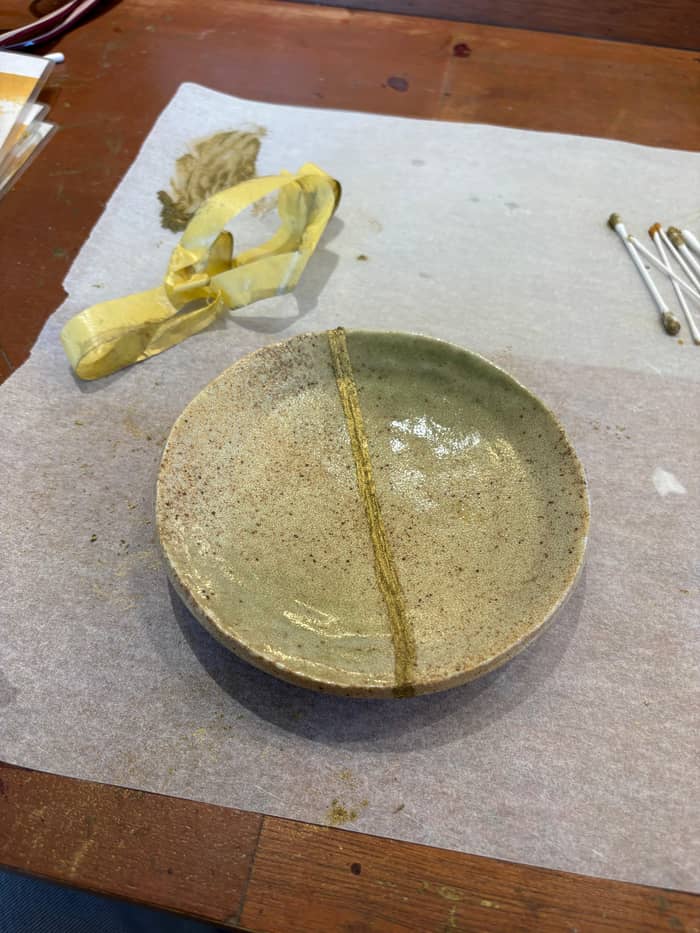
The one on this page
The one-hour class
Our Asakusa pick
- TimeOne bench hour
- Ratings1,300
- Pricefrom $15
Quick decision aid
Kintsugi workshop in Asakusa
★ 4.9 · 1,300 written reviews
Fast answer
Kintsugi classes in Tokyo run from 1 to 2 hours and differ by district, group size, material and price, so compare them before you book.
Class essentials
Two questions, one pick
Say how long you can stay and what matters most, and a class appears with its starting price.
Suited to you
from $15
It runs 1 hour and has 1,300 reviews.
Suited to you
from $76
It runs 1.5 hours and is limited to 8 participants.
Suited to you
from $10
It runs 1.5 hours and is wheelchair accessible.
Suited to you
from $24
It runs 1.5 hours and has 844 reviews.
Suited to you
from $140
It runs 2 hours for up to 6 participants.
Tokyo kintsugi workshops differ in materials, length, room size and price. This page sets them side by side, district by district, so you can choose before you book.
Editorial team, kintsugitokyo.com · Updated November 6, 2026 · Takes 6 min
Basics
Before you compare classes, learn the four things that actually change the afternoon. The first is the material. The Asakusa listing we book says guests use real urushi lacquer and gold powder, while another Tokyo listing says it uses synthetic lacquer, adhesive and substitute gold powder. The second is time, which runs from 1 hour to 2 hours across the classes below.
The third is the room. Some listings cap the group at 5, 6 or 8 people, while ours allows up to 30 in a shared group. A big room means a lively workshop with less one-to-one coaching, and a tiny one means a quiet table and a higher price. Neither is better in itself, only better for a particular person.
The fourth is what you walk out with. Real lacquer needs time to cure, so a one-session class cannot finish a full repair from scratch. One Tokyo studio says plainly that a complete repair takes days to weeks and that its 90-minute vessel is partly prepared in advance.2 Keep that in mind when a listing promises a restored piece, and read what it says about the work you do yourself.
Side by side
| Class | Area | Length | Seats | Ratings | From |
|---|---|---|---|---|---|
| Ours, Viator | Asakusa | 1 h | Up to 30 | 1,300 | $15 |
| Gold repair | Asakusa | 1.5 h | No cap listed | 844 | $24 |
| Resin and substitute gold | Tokyo | 1 h | Up to 20 | 504 | $58 |
| Accessory making | Shibuya | 1.5 h | Up to 6 | 113 | $44 |
| Gold repair | Tokyo | 1.5 h | No cap listed | 94 | $10 |
| English guide | Nihonbashi | 1.5 h | Up to 10 | 65 | $126 |
| Art repair | Tokyo | 1.5 h | Up to 5 | 64 | $159 |
| Discover kintsugi | Ginza | 1.5 h | Up to 8 | 49 | $76 |
| Gold repair | Shinjuku | 1.5 h | No cap listed | 40 | $10 |
| With matcha | Shibuya | 2 h | Up to 6 | 29 | $140 |
Areas come from the listing titles; prices are opening prices per person, not quotes.
Asakusa has the densest cluster of classes, which is why our own pick sits here. It is a 1-hour workshop on the 10th floor of a building, behind an entrance with a workshop sign, shared by up to 30 people with staff who speak English and Japanese. It starts from $15 per person and holds 1,300 ratings averaging 4.9, of which 1,243 are five-star.
A second Asakusa listing runs 1.5 hours with an English-speaking instructor and starts from $24. Its listing describes urushi lacquer and real gold powder, a small class and individual guidance, and it can be booked with pay later. That extra half hour is the main reason to pick it over the shorter class, if your schedule has room.
Asakusa also has a studio you can contact directly. The operator Tsugu Tsugu opened its Asakusa studio in May 2022 at 1-1-2 Kaminarimon, 3 to 4 minutes on foot from Asakusa Station, and its Asakusa room takes up to 15 people for the traditional workshop.4,5,6 If you want a kintsugi experience in Tokyo that you book with the studio itself, that is the route, though its sessions follow its own timetable and prices in yen.
Ratings counted
Counts are the reviews shown in each listing record; our class and the resin class are on Viator, the rest on GetYourGuide.
West of the river the classes shrink. A Shibuya accessory workshop is limited to 6 participants, runs 1.5 hours, and starts from $44, with an instructor who speaks English and Japanese. You make jewelry-style pieces from fragments, which is a different aim from mending a plate that you will eat from.
A Shinjuku gold repair workshop runs 1.5 hours with an English-speaking instructor and starts from $10; the listing marks it wheelchair accessible and offers pay later. A Shibuya session that adds matcha runs 2 hours, is limited to 6 participants and starts from $140, with a perfect 5.0 rating from 29 reviews. A rating from so few people is encouraging, not conclusive.
Ebisu belongs here too, because the Tsugu Tsugu studio there sits at 2-21-2 Ebisu, 12 minutes on foot from Ebisu Station, and takes up to 6 people for its traditional workshop.10,6 Small rooms suit guests who ask a lot of questions about the lacquer. Large rooms suit guests who want a social hour and a lower price.
Three starting points
The one on this page
Our Asakusa pick
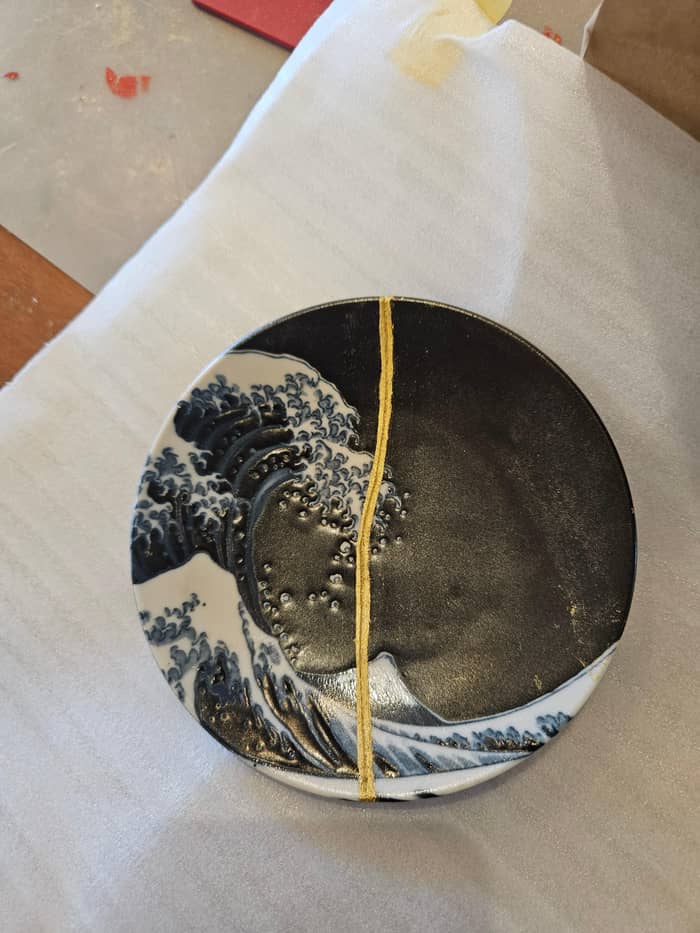
More time
Asakusa, 1.5 hours
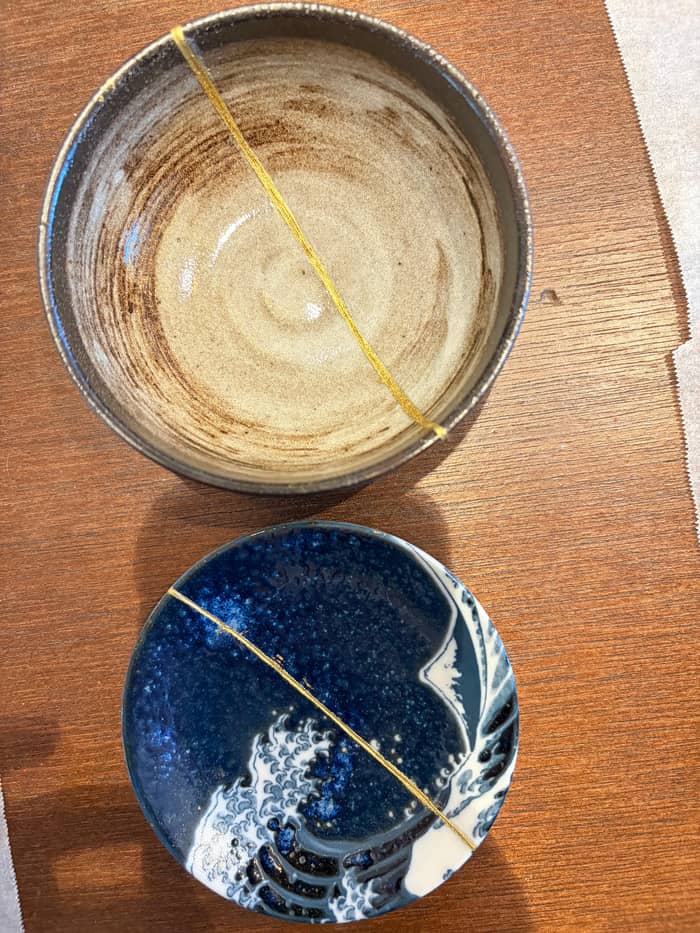
Quiet table
Ginza, 8 at most
The central business districts hold the priciest and smallest classes. A Ginza workshop is limited to 8 participants, runs 1.5 hours and starts from $76, with a 4.9 rating from 49 reviews. Two Nihonbashi listings sit above it: one with an English guide limited to 10 participants from $126, and one limited to 5 participants from $159.
These two also have the strictest cancellation terms in this comparison, since both allow a full refund only up to 3 days ahead, where most other listings give 24 hours. If your Tokyo plans are fluid, that difference matters more than the price gap. A class you cannot cancel until the last day is a gamble when typhoon season or a delayed flight can scramble a week.
What you pay for in this range is attention and quiet, not a different kind of gold. Asking for the best kintsugi class in Tokyo has no single answer: a couple on an anniversary may want a table of five, while a family with teenagers will do better in a room that tolerates noise. The ratings here are strong but rest on far fewer reviews than the Asakusa classes, so treat them as promising.
Price your group
Type your party size and see each class total.
Compare 4 side by side
Type your party size and see each class total.
≈
View≈
View≈
View≈
ViewFigures are GetYourGuide from-prices, translated at the ECB reference rate. The booking step shows what you pay exactly.
Choosing a class
First
Asakusa has the most classes, while Shibuya, Ginza and Nihonbashi hold the small rooms.
Next
Listings run from 1 hour to 2 hours, so match one to your day.
Then
Real urushi needs curing time, while resin classes finish the same day.2,3
After that
Most give 24 hours, but two Nihonbashi listings give 3 days.
Last
Our workshop is cashless and may reschedule guests over 15 minutes late.
Read the take-home line of any listing carefully. Our Asakusa listing says guests leave with their own golden-repaired ceramic piece. How a piece made with real lacquer reaches your suitcase is a separate question, and the clearest answer we found comes from a studio that spells it out: take it home the same day in a drying box, collect it from the studio after at least one day, or have it shipped about a week later.11
The drying box is simple. That studio asks you to keep it closed in a warm place around 20 to 30 degrees Celsius for at least one day.12 Urushi hardens as it absorbs moisture, which is why makers dry it where humidity and temperature are controlled, and Japan Up Close notes that certain conditions are needed for the lacquer to harden.13,9
Resin classes skip all of that. The same studio runs a 60-minute workshop with epoxy and a brass-colored finish, priced at 6,600 JPY, for ages 6 and over, and you take everything home the same day.3,1 It says the workshop is meant for small items and accessories and not for repairing tableware for food use.14 Our page on traditional against modern kintsugi goes into that trade-off.
Video
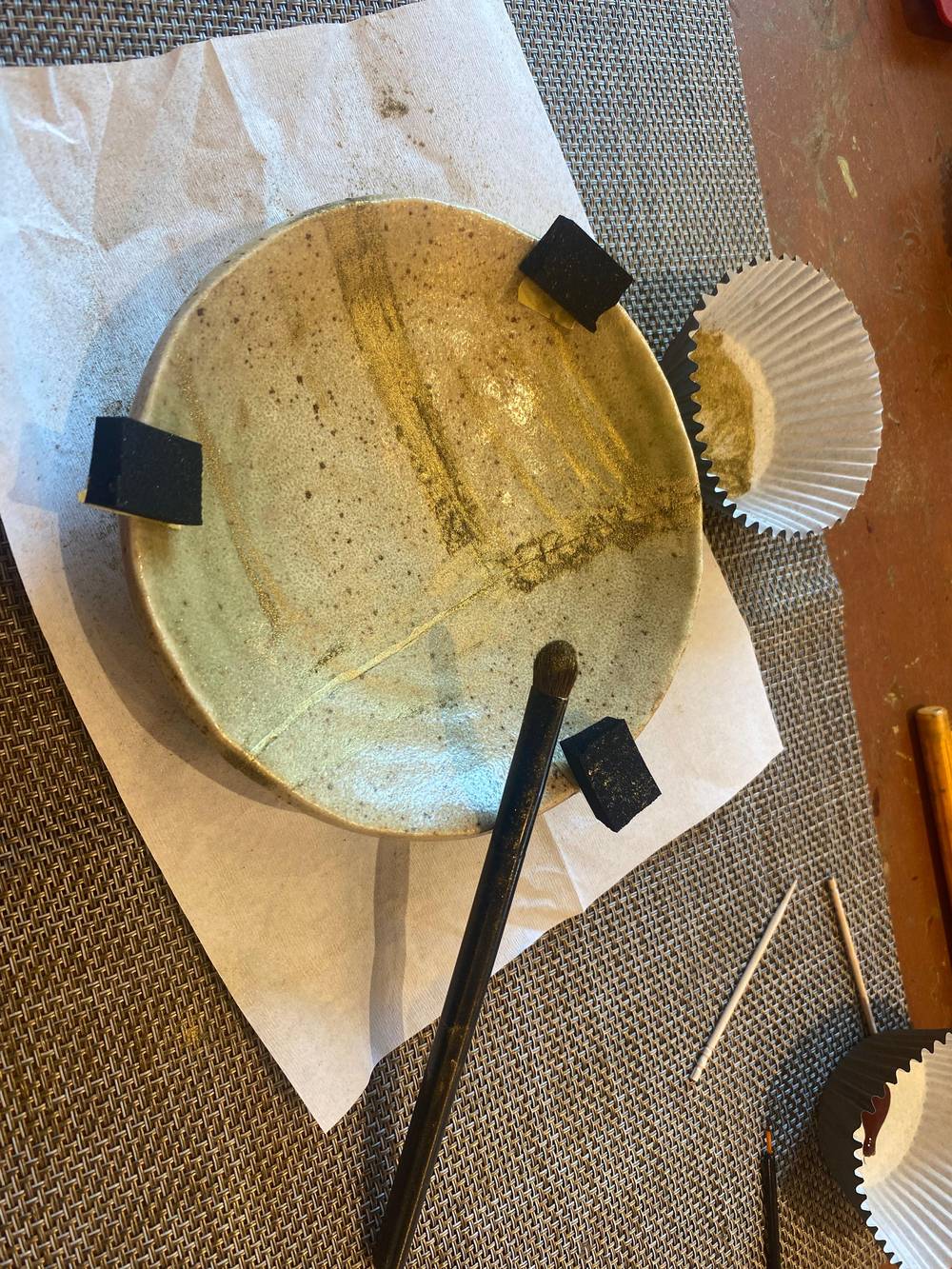
HDR Travel on YouTube · Video data is requested only when you tap play.
The reason for this is that kintsugi can be time consuming and certain conditions are required for the lacquer to harden.
Checklist
Cancellation windows vary, so check them. Our Asakusa workshop gives a full refund up to 24 hours before and nothing inside that window, and the studio takes cards only, from Visa and Mastercard to JCB and Discover. A guest arriving over 15 minutes after the start can be moved to another slot, and there is no space for suitcases, which matters if you are coming straight from a hotel checkout.
Children need a little planning. In our listing the age bands are children 0 to 12 and adults 13 and over, a booking takes 1 to 15 travelers, and every booking needs at least one adult. At the Tsugu Tsugu studio the traditional workshop is for ages 13 and over, so families with younger children are pointed to its resin workshop for ages 6 and over.15,1
Language is the last check. The Tsugu Tsugu studios in Ebisu and Asakusa have staff who communicate in English and French on selected days, and a private booking costs the price of 6 persons.16,17 If you are a group of friends, that private room can be the cheapest way to get an unhurried session. For solo travelers, the shared Asakusa class is the easy default.
FAQ
It holds 1,300 ratings averaging 4.9, ahead of the 844 reviews of the 1.5-hour Asakusa class.
Our class runs 1 hour, most others run 1.5 hours, and the Shibuya matcha session runs 2 hours.
A Tokyo gold repair class and a Shinjuku class both open below that, per person.
One Nihonbashi-area listing is limited to 5 participants, and the Ginza class to 8.
Our class and most others allow 24 hours; two Nihonbashi listings ask for 3 days of notice instead.
One listing says synthetic lacquer and substitute gold powder, and one studio workshop uses epoxy.3
Our listing has an age band for children 0 to 12 with an adult required, and a resin workshop takes ages 6 and over.1
Sources
Continue reading
Questions about the session? Someone on the team answers right here.