The records
Tokyo National Museum
Mended pieces in the records
- PiecesJar, dish, tea bowl
- Hours9:30 to 17:00
- AreaUeno
Explore the stops
Fast answer
Examples of kintsugi in Tokyo museums include a mended Ninsei water jar, an Imari dish and a Joseon tea bowl in the Tokyo National Museum collection.
Museum essentials
Map of 9 stops
Choose a route, then tap a marker or stop for a note and Google Maps.
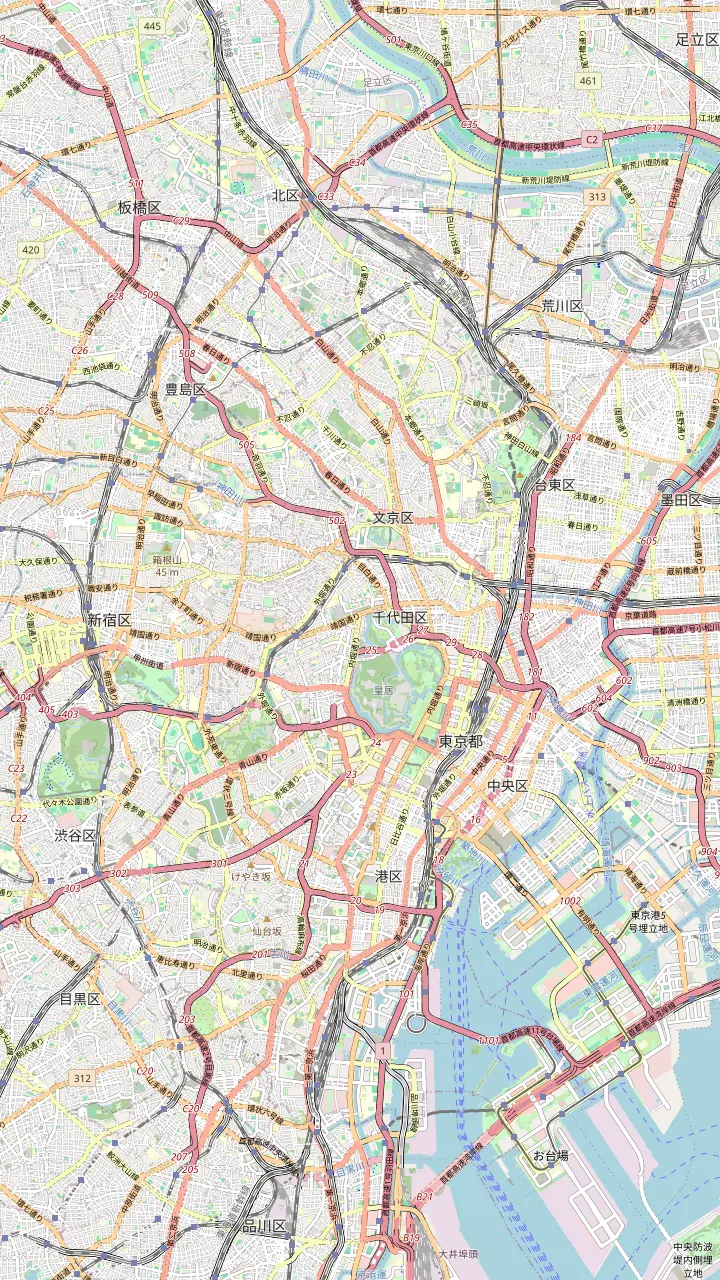
Its collection records include a Ninsei water jar mended in kintsugi after the 1923 earthquake and a Joseon tea bowl with repairs in gold lacquer.
Google MapsOpen 10 am to 5 pm, with the garden and cafe on the same hours, and closed on Mondays except when a national holiday moves the closing to Tuesday.
Google Maps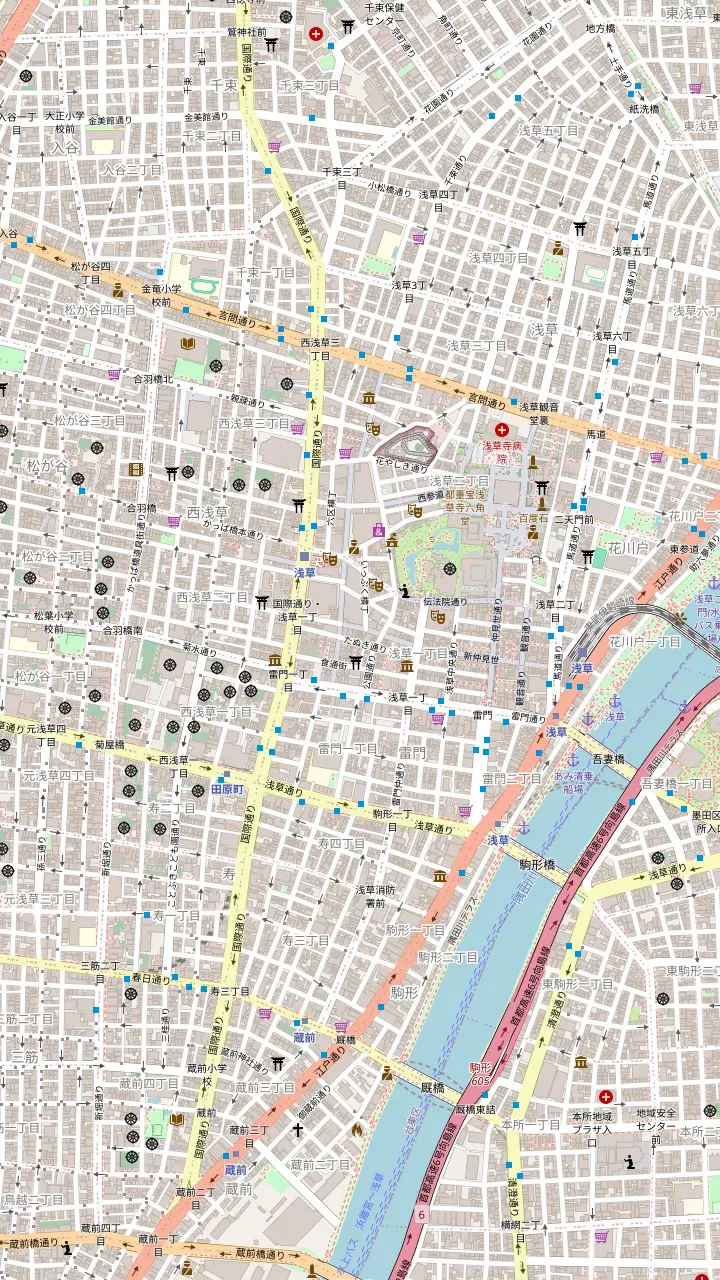
The Tsugu Tsugu studio in Asakusa has its address on Kaminarimon, at 1-1-2, near the gate.
Google MapsOur listing places the kintsugi workshop minutes from this temple, on the 10th floor of a building with a sign at the entrance.
Google MapsThe Tsugu Tsugu studio is 3 to 4 minutes on foot from this station.
Google MapsKappabashi is 5 minutes on foot from this stop on the Ginza Line.
Google MapsThe kitchen street has about 160 shops, with racks of colorful, well-priced Japanese ceramics.
Google Maps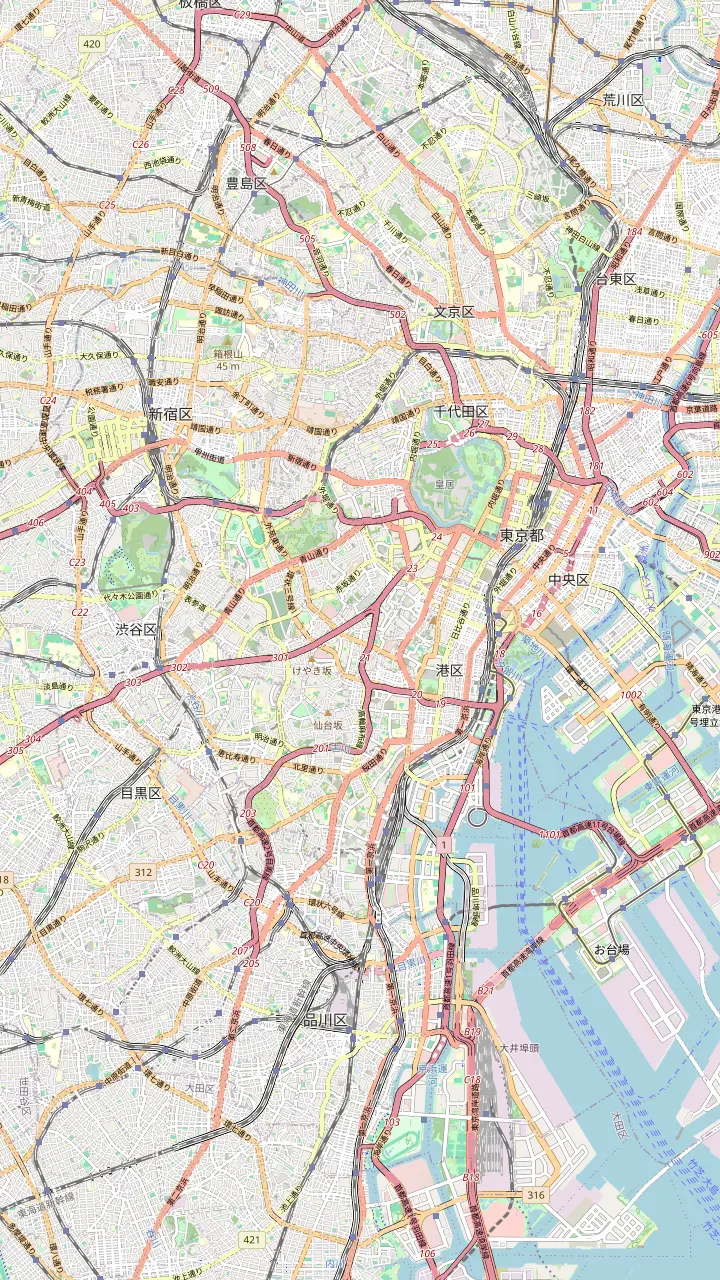
The Oedo Antique Market has free admission, runs 9:00 to 16:00, closes in rain and counts 250 dealers.
Google MapsThe Tsugu Tsugu Ebisu studio is 12 minutes on foot from here.
Google MapsMap © OpenStreetMap contributors
Mended bowls rarely get a gallery, so finding them takes detective work. This page lists the pieces the Tokyo National Museum records, adds the clamped bowl behind the legend and explains how to read a label.
Editorial team, kintsugitokyo.com · Updated November 6, 2026 · Takes 6 min
Basics
Tokyo museums rarely put kintsugi in a title. The repair appears in the small print of an object record, where a curator notes that a vessel was mended after it broke. That is why a search for examples of kintsugi in a museum database returns very few results, and why the best strategy is to learn the phrases that labels use rather than a single word.
The wording varies. One Tokyo National Museum record says a piece was repaired using a traditional technique known as kintsugi, which it translates as gold mending, while another lists the material as stoneware with repairs in gold lacquer.1,3 A third describes the glue and the powder in plain terms, which is the clearest description of the method you will find on a label.2
So when you walk a gallery, look for words such as gold lacquer, gold mending, lacquer repair and mended. Then look at the object itself, because the seams show as thin gold lines that follow the break. The pieces below are the ones we could confirm in the museum's own collection records, which is a firmer footing than a tourist rumor.
Museums at a glance
| Museum | What to look for | Hours | Note |
|---|---|---|---|
| Tokyo National Museum | Three mended pieces in records | 9:30 to 17:00 | Later some days |
| Tokyo National Museum | The Bakohan clamp bowl | Same hours | Check display |
| Nezu Museum | Tea ceramics and garden | 10 am to 5 pm | Closed Mondays |
| Idemitsu Museum | Ceramic Sherd Room | Not confirmed | Closure notice |
Hours come from each museum's own page; the Idemitsu Museum shows a temporary closure notice, so confirm before you travel.8,4,5,6,7,10
For kintsugi at the Tokyo National Museum in Ueno, start with the records, which are specific. A water jar by the potter Ninsei, from the 17th century, showcases his Chinese-style brush painting, and the museum notes that it was damaged in the Great Kanto Earthquake of 1923 and repaired using kintsugi.1 The repair is therefore a mark of a real event, a piece of Tokyo history written into a tea utensil.
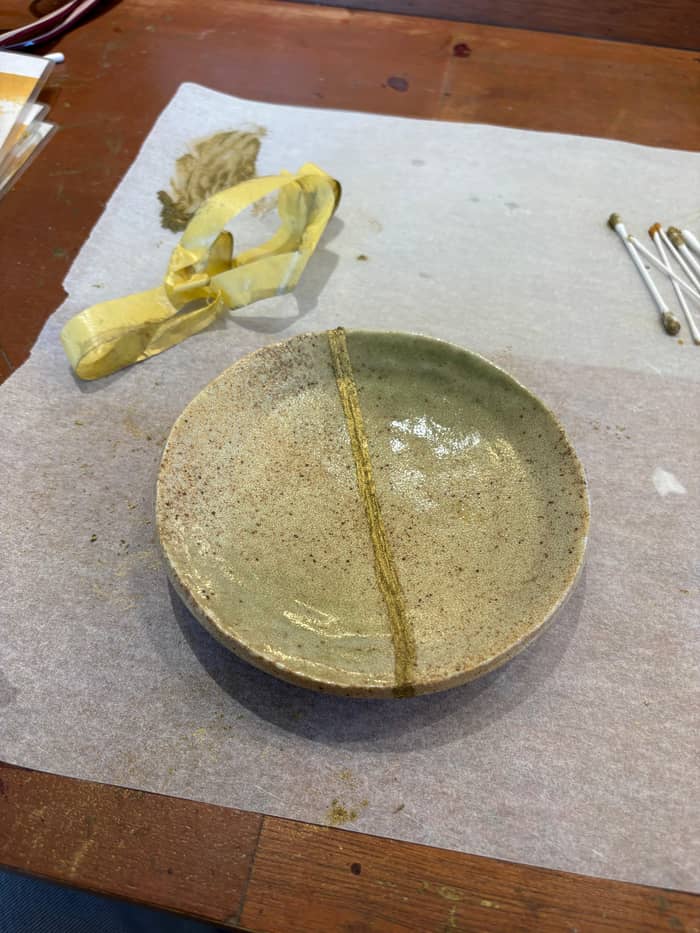
The second is an Imari shallow bowl from the 17th century that shows a kingfisher on a bamboo branch.2 The record says it was once broken and that an artisan glued the fragments together using natural lacquer, then dusted the lacquer with gold powder for a striking decorative effect.2 The third is a tea bowl from the Joseon dynasty, 16th century, listed as stoneware with repairs in gold lacquer.3
Whether any of the three is on view the day you visit is not stated in the records, which belong to the ColBase database. The museum is generally open from 9:30 to 17:00, later on Fridays, Saturdays and some Sundays, with last admission 30 minutes before closing.8 Check the museum's daily exhibition page, then ask at the information desk for the nearest tea ceremony or ceramics room. Our map shows the museum in Ueno.
If you want the object at the heart of the kintsugi legend, look for Bakohan. The e-Museum database lists it as a Longquan ware celadon bowl, height 9.6 and aperture 15.4, from the Southern Song period, 13th century, held by the Tokyo National Museum as TG-2354.4 The record says it was once owned by the shogun Ashikaga Yoshimasa, who cracked it on the bottom and sent it to China for an exchange.11
The bowl came back with the crack fastened by a large clamp that looked like a locust, and so it was named Bakohan, large-locust clamp.12 This is not kintsugi, which uses lacquer and gold, but it is the repair that the legend says pushed Japanese craftsmen to find a more beautiful way to mend. The e-Museum account draws on a record written in 1727 by the scholar Ito Togai.13
Treat the bowl as a historical object first and a story second. It is a Chinese celadon with a clamp, valued in Japan partly because of that repair. Our history page lays out how the legend connects to the Muromachi tea rooms, and where the sources hold back from calling it the origin of kintsugi. If the bowl is not on display, the e-Museum photographs and text are the next best thing.
Which museum
Start with the object or the mood.
If I want a labelled kintsugi piece
Tokyo National Museum
If I want the legend object
The Bakohan bowl
The e-Museum entry holds the clamped celadon, TG-2354.4
If I want a quiet garden after ceramics
Nezu Museum
The garden shares the museum hours and closes with the galleries.5
If I want broken pottery as the subject
Idemitsu Ceramic Sherd Room
Its Ceramic Sherd Room shows pottery fragments, but check the closure notice first.10,7
If I want to touch the craft
A class in Asakusa
Our listing says real urushi lacquer and gold powder.
Three stops
The records
Mended pieces in the records
The legend
Clamp repair, TG-2354
The tea world
Tea ceramics, garden
The Nezu Museum in Minami-Aoyama is a fine stop for the world of tea and ceramics around kintsugi. It is open 10 am to 5 pm, with the last entry at 4:30 pm, and the garden, shop and cafe share those hours.5 It is closed on Mondays, during exhibition installations and over New Year, but when a national holiday falls on a Monday it opens that Monday and closes on the Tuesday.6
For a collection exhibition the museum lists an adult ticket at 1400 yen online and 1600 yen at the door.19 We found no Nezu record that names a kintsugi piece, so go for the tea ceramics and the garden, and treat any repair you spot as a bonus. The museum's own exhibition pages name what is on view, and booking a timed ticket online is the simplest way to plan the visit.
The Idemitsu Museum of Arts is a different case. Its English page carries a notice of temporary closure dated December 26, 2024, so confirm the current status before planning a visit.7 The museum describes a Ceramic Sherd Room where fragments of pottery collected from kilns around Asia are displayed, which is a rare chance to see broken pottery treated as a subject in itself.10
Make one yourself
Type your party size and see each class total.
Compare 3 side by side
Type your party size and see each class total.
≈
View≈
View≈
ViewFigures are GetYourGuide from-prices, translated at the ECB reference rate. The booking step shows what you pay exactly.
A museum day
Before
The collection records do not say, so open the museum calendar.8
Morning
It opens at 9:30 and runs to 17:00 on most days.8
Look for
Midday
Open from 10 am, entrance closes at 4:30 pm.5
Afternoon
The studio sits 3 to 4 minutes from Asakusa Station.9
Train your eye before the visit. In kintsugi, Japan Up Close explains, the pieces are glued, then gold powder is dusted or dabbed along the cracks and clings to the glue that seeps out, so the seam is a slightly raised, irregular golden line.20 Admirers called the result keshiki, scenery, because the seam reads like a river across the bowl.21
Different repairs look different. A clamp, as on the Bakohan bowl, shows as metal staples bridging the crack.12 An ordinary item mended in the yakitsugi technique used lead glass instead and was not a tea ceremony piece.22 A lacquer seam without gold looks dark, because the lacquer itself is the visible part. When a label says repairs in gold lacquer, expect a line of gold along the join.3
Never touch a case. The point of a visit is to look at how the repair follows the break, how wide the seam is and how it changes the plate. Then, if you want to feel the process yourself rather than only look at it, book a class: our Asakusa workshop is listed as a 1-hour session using real urushi lacquer and gold powder, and it starts a short walk from Senso-ji.
Video
TokyoNationalMuseum on YouTube · Video data is requested only when you tap play.
An artisan glued the fragments together using natural lacquer. He then dusted the lacquer with gold powder for a striking decorative effect.
Checklist
Studios double as small galleries. The Tsugu Tsugu studio in Asakusa sits at 1-1-2 Kaminarimon, 3 to 4 minutes on foot from Asakusa Station, and its operator says larger restored kintsugi vessels are sold exclusively at its studios.9,23 The same page says the vessels often sell out quickly and that priority goes to customers who visit in person.24
That means a walk through its Asakusa studio can show you finished pieces at eye level, which a locked museum case never will. Its Ebisu studio sits at 2-21-2 Ebisu, 12 minutes on foot from Ebisu Station.18 Check the opening hours on the studio's own page before you travel, since we do not hold them here.
If you are working out where to see kintsugi in Tokyo and also want to try it, combine the two: a morning at the Tokyo National Museum, an afternoon in Asakusa. Our page on where to buy kintsugi covers the shopping side in more detail. The Oedo Antique Market and the Kappabashi shops, both marked on the map, add old and new ceramics to the same itinerary.
FAQ
It was fastened with a large clamp that looked like a locust, which gave the bowl its name.12
Its English page carries a temporary closure notice dated December 26, 2024.7
The records do not give the display status, while the museum publishes hours and daily exhibitions.8
Sources
Continue reading
Questions about the session? Someone on the team answers right here.