What you do
Kintsugi
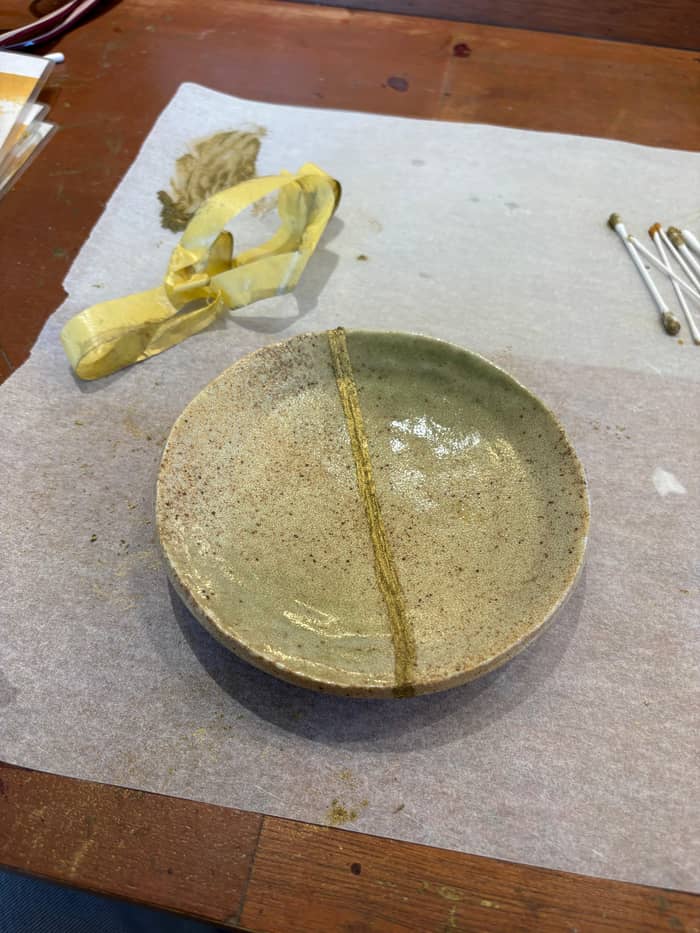
The craft
- MeansGolden joinery
- MaterialUrushi and gold
- GlossGold mending
Quick decision aid
Fast answer
Kintsugi and kintsukuroi name the same repair, golden joinery or gold mending, in which lacquer and gold powder mend a broken piece.
Word essentials
Two questions, one pick
Say how you like to learn, and a class appears with its starting price.
Suited to you
from $15
It runs 1 hour and has 1,300 reviews.
Suited to you
from $24
It runs 1.5 hours and has 844 reviews.
Kintsugi has many names and a lot of philosophy attached. This page unpacks the words, shows how wabi-sabi and mottainai relate to the craft, and says which claims the sources really support.
Editorial team, kintsugitokyo.com · Updated November 6, 2026 · Takes 6 min
Basics
Start with the word everyone uses. JNTO says kintsugi is roughly translated as golden joinery and usually involves a natural lacquer dusted with gold powder, while its experience pages gloss it as literally golden joinery.1,6 The Cleveland Museum of Art uses the same gloss, gold joinery, for the method of repairing broken parts with gold mixed with lacquer.7
The Tokyo National Museum words it differently. In its collection records it describes a repaired water jar and a repaired dish by saying the piece was repaired with a traditional technique known as kintsugi, which it translates as gold mending.2,8 Joinery and mending are two English renderings of the same Japanese idea, which is the first clue that the word choice is partly a translation question.
The written form carries the same sense. The word is written with the characters 金継ぎ, and the craft is one in which broken ceramics are respected and healed, with the break highlighted in gold or silver. The first character stands for gold. The second part comes from a verb for joining one thing to another, so the whole word reads as gold plus join, with no hint of hiding anything.
Glossary
| Word | Meaning | Who explains it |
|---|---|---|
| Kintsugi | Golden joinery | JNTO |
| Kintsukuroi | Golden repair, a variant name | A language note |
| Keshiki | Scenery | Japan Up Close |
| Urushi | Lacquer from tree sap | JNTO |
| Yobitsugi | Joining mixed pieces | A Tokyo listing |
| Yakitsugi | Mending with lead glass | Embassy of Japan |
| Wabi | Simplicity, in one reading | Nippon.com |
| Mottainai | Avoiding waste | Ministry of the Environment |
Each meaning restates the source named in the third column; kintsukuroi is a language note on the same repair, not a separate technique.1,4,11,12,13,5
Many English articles introduce kintsukuroi as if it were a rival term, and that is where the confusion about the difference between kintsugi and kintsukuroi begins. The word keeps the character for gold but ends with a verb that means to mend or patch, not to join. It is a variant name that the English-language web uses for the same repair, and the translation golden repair is simply that verb rendered literally.
Nothing in the museum and government sources we read sets them apart as techniques. The Oxford English Dictionary and Cambridge Dictionary define kintsugi, and both describe one method: repairing broken pottery with lacquer and a gold, silver or platinum powder, in a way that does not hide the break.9,10 The Tokyo National Museum, as noted, calls its repaired pieces kintsugi and glosses it as gold mending, which is exactly the ground that golden repair covers.2
So the practical answer is simple. If a shop, a class or a book says kintsukuroi, it means the golden mending craft that most people call kintsugi. What differs from listing to listing is the material, not the name. A kit or workshop that says either word may use natural urushi and real gold, or resin and a brass-colored powder, so read the materials list before you trust the word.
Reading the word
Kin
The first part of the word means gold, the metal on the seam.
Tsugi
The second part comes from joining, as in golden joinery.1
Gloss
The Tokyo National Museum renders it as gold mending.2
Cousin
A variant name for the same repair, golden repair in English.
Mood
Japan Up Close sees similarities in how both embrace flaws.3
Wabi-sabi is the aesthetic that people most often attach to kintsugi. Nippon.com says wabi, sabi and yugen together encapsulate an essentially Japanese aesthetic that values depth, understatement, shadow and imperfection over surface sheen.16 The tea historian Kumakura Isao, quoted there, describes wabi as a state of mind that seeks spiritual satisfaction in simplicity and poverty.13
JNTO ties the pair to pottery. In its guide to Japanese ceramics it says that potters seeking simplicity and asymmetry embodied the wabi-sabi acceptance of transience and imperfection, in contrast to the perfectly executed shapes and colors of fine porcelain.17 That is the world kintsugi comes from: a taste that preferred a slightly uneven bowl to a flawless one.
There is a careful scholarly footnote. The cultural scholar Iwai Shigeki, cited by Nippon.com, found that in books on tea from the seventeenth century to the present, wabi and sabi have not consistently been seen as the main aesthetic aims of the tea ceremony.15 In other words, the neat line from the tea masters to the modern idea of wabi-sabi is partly a later construction. The words are real, but their history is less tidy than a class handout suggests.
Three ideas
What you do
The craft
How it looks
The taste
Why mend
The habit
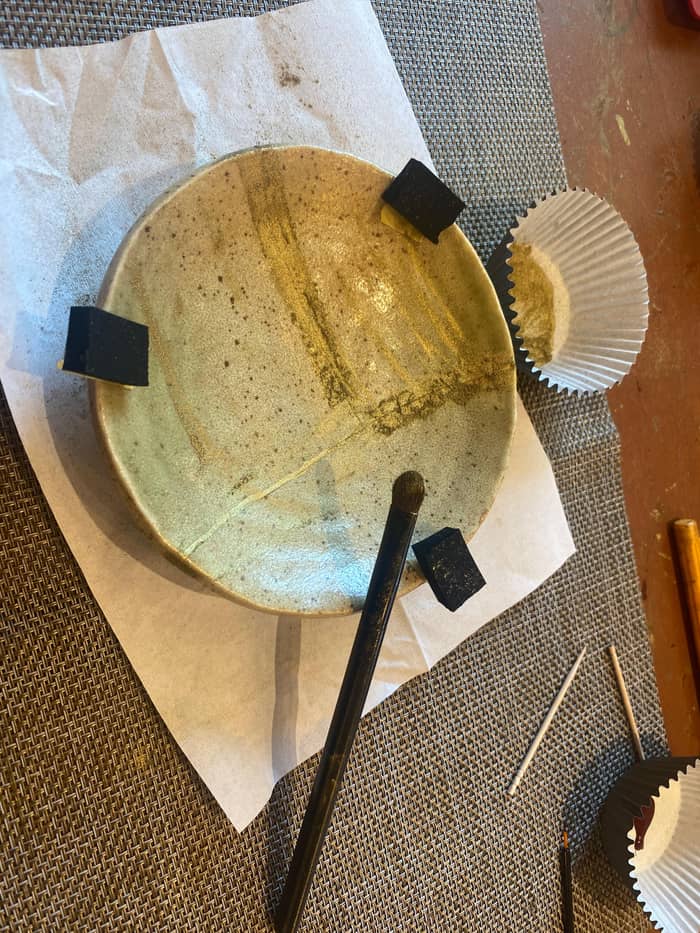
Is kintsugi wabi-sabi? Several official sources say it is closely related. Japan Up Close notes that kintsugi bears similarities to the philosophy of wabi-sabi, which embraces flaws and imperfections, and treats breakage and mending as part of an object's history rather than something to hide.3 JNTO goes a step further and says the technique of repair embodies the wabi-sabi aesthetic, which embraces the beauty in imperfection.14
JNTO also links it to the Buddhist idea of impermanence, saying that closely paralleling wabi-sabi, the impermanence of an object is revered as the natural progression of life.18 This is the language of philosophy, not of technique. It tells you how people feel about a golden seam and nothing about how the seam is made, which is why a class can teach the craft in an hour and leave the philosophy to the reader.
A fair summary is that kintsugi is a craft, wabi-sabi an aesthetic, and the first is often described through the second. That wording, kintsugi and wabi-sabi, is accurate in the sense of resemblance. It is less accurate as a claim that the repair was invented to illustrate the philosophy, since the sources describe a practical origin in lacquer mending and tea culture.
See the words at work
Type your party size and see each class total.
Compare 3 side by side
Type your party size and see each class total.
≈
View≈
View≈
ViewFigures are GetYourGuide from-prices, translated at the ECB reference rate. The booking step shows what you pay exactly.
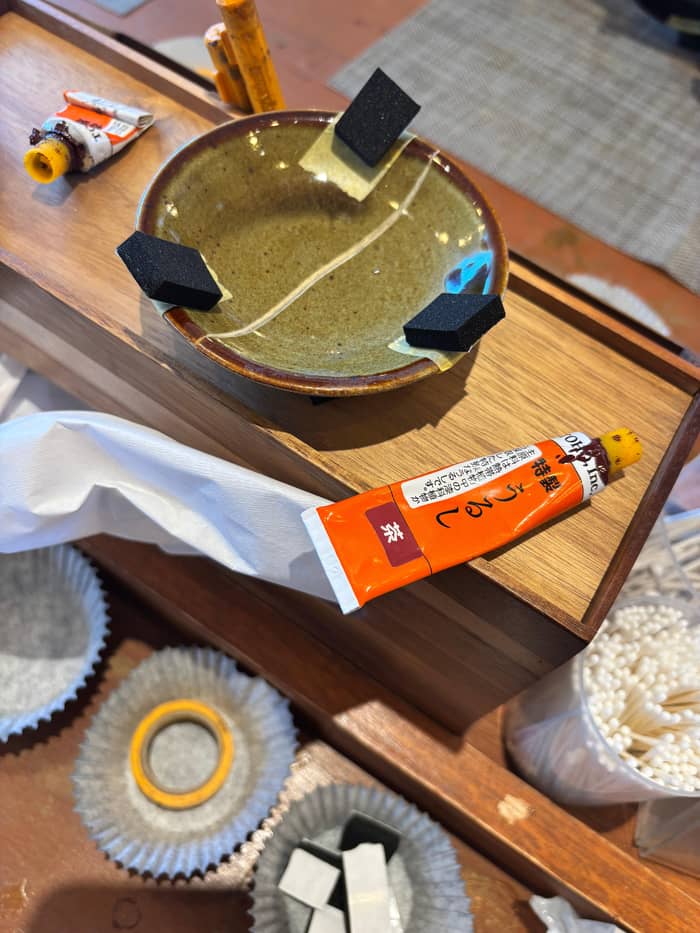
Another word belongs on the list. Japan's Ministry of the Environment says that historically Japan was famous for a society based on the Mottainai spirit, the spirit of avoiding being wasteful in life, particularly in the Edo period.5 Mottainai is the regret you feel when something useful is thrown away, and it fits a culture in which a cracked bowl is mended rather than discarded.
LACMA conservators make the same point from the museum side. They describe the 16th century, when kintsugi was popular in Japan, as a time when people repaired broken pots and kept using them.19 JNTO adds that kintsugi can be seen as a traditional sustainable art form that suits a modern need to manage resources better.20 Thrift and beauty, in other words, are not opposites here.
People often ask about the difference between kintsugi and wabi-sabi, and mottainai gives a third angle. Kintsugi is the repair, wabi-sabi is the taste that finds the repair beautiful, and mottainai is the habit that makes the repair worth doing. Together they explain why a visitor with a chipped cup might leave a workshop thinking about more than pottery.
Video
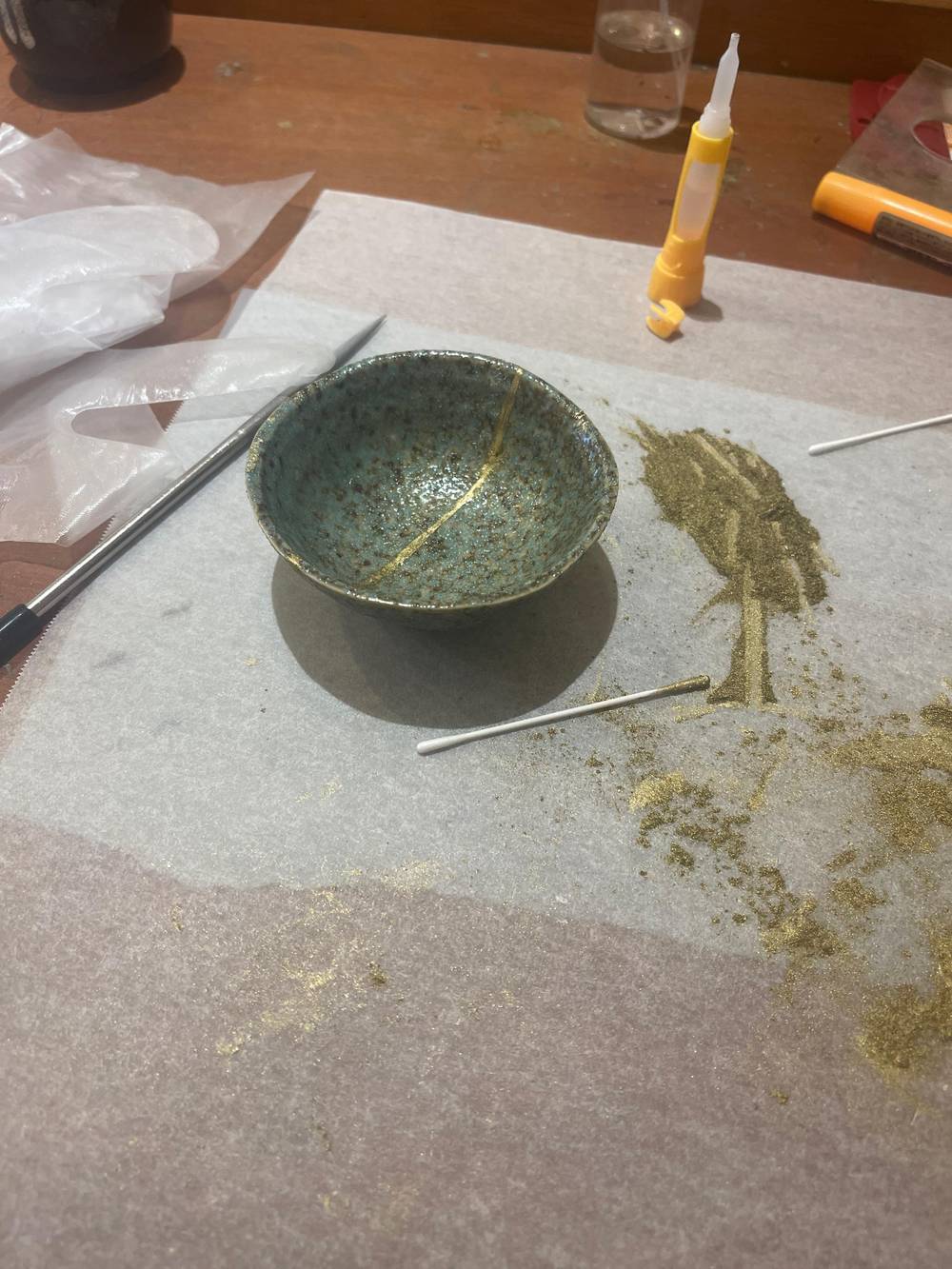
The School of Life on YouTube · Video data is requested only when you tap play.
a state of mind that seeks spiritual satisfaction in simplicity and poverty
Checklist
A good workshop will teach you a few terms. Urushi is the tree-sap lacquer that, as JNTO notes, traditionally binds the cracks in kintsugi.11 Keshiki, the word for scenery, is what Japan Up Close says admirers called the repair, because the gold seam reads like a landscape across the bowl.4
Two more terms describe variations. Yobitsugi is described in one Tokyo listing as patching a break with fragments that differ in color or material, and yakitsugi is the lead glass technique that the Embassy of Japan in Singapore says was used on ordinary items while kintsugi stayed with tea ceremony pieces.12 The terms are not interchangeable, and a class that mentions one is telling you something about its method, so ask which applies to the piece you will make.
The modern term is simple kintsugi. Japan Up Close says a technique called simple kintsugi has emerged in recent years, simplifying the process through the introduction of technology, and the Japan Creative Centre says it uses water-resistant craft glue and acrylic ceramic paint.21,22 Our page on traditional and modern kintsugi compares the two. If you prefer to try the craft after reading about it, our Asakusa class is a 1-hour workshop that the listing says uses real urushi lacquer.
FAQ
Japan Up Close says it bears similarities to wabi-sabi, which embraces flaws and imperfections.3
Historian Kumakura Isao calls it a state of mind seeking satisfaction in simplicity and poverty.13
The Ministry of the Environment ties it to Japan's Edo period society.5
Admirers of the technique used the word for the repaired bowl.4
The Oxford English Dictionary sees it earliest in a 2008 issue of Nikkei Weekly.9
Sources
Continue reading
Questions about the session? Someone on the team answers right here.